
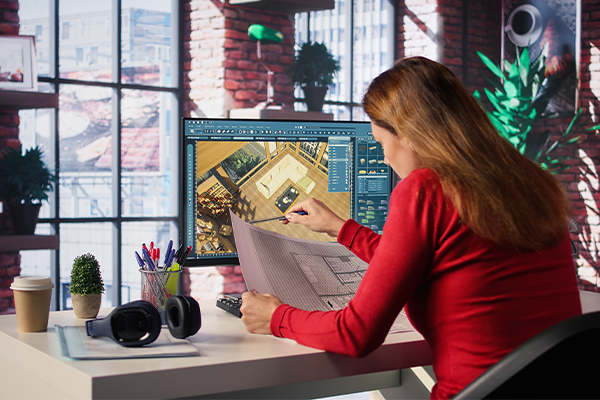
In the rapidly changing world of AEC today, virtual design and construction (VDC) has emerged as a key driver for smarter, faster, and more cost-effective execution of projects. As the level of construction complexity goes up and sustainability becomes a watchword, Virtual Construction is rewriting the rules of how teams plan, collaborate, and deliver. By integrating leading technologies, VDC offers stakeholders unparalleled opportunities to visualize every step in the lifecycle of a project well before a single brick is laid, thereby minimizing risk, improving accuracy, and enhancing decision-making throughout the lifecycle from design to completion.
Understanding Virtual Design and Construction in the USA
Virtual Design and Construction is more than just the creation of 3D models; it’s a holistic process that incorporates building information modeling, cloud collaboration, and project analytics into one system to optimize design coordination and construction management. It provides a shared digital environment where architects, engineers, and contractors can work together simultaneously, identify design conflicts much earlier, and simplify communication.
At its essence, VDC is about connecting data, people, and processes throughout the project’s life. This integration enables different stakeholders to simulate real-world scenarios, assess performance, and make data-driven adjustments so that the outcome built matches perfectly with the design intent.
The Role of Virtual Construction in the Modern AEC Landscape
Modern AEC currently faces a sea change from merely reactive project management to proactive design intelligence. Virtual Construction is at the very nucleus of this change, allowing digital coordination that avoids on-site surprises and schedule delays altogether.
With the help of Virtual Construction in AEC, teams can now:
- Identify clashes between architectural, structural, and MEP systems early in the design stage and resolve them.
- Use virtual mock-ups for stakeholder approvals in advance of physical construction.
- Leverage data from BIM models for accurate cost estimation and scheduling.
- Enhance sustainability with energy and material optimization simulations.
With AEC firms increasingly embracing integrated project delivery and design-build models, Virtual Construction facilitates seamless collaboration for all project partners, thus driving greater transparency and accountability.
Key Benefits of Virtual Construction in USA AEC Projects
Its benefits extend well beyond visualization to every aspect of project management, and the returns on investment can be tangible. Let’s see how VDC is transforming the AEC workflow:
1. Better Design Accuracy
Virtual models show a very detailed, data-rich representation of the project. This level of precision eliminates guesswork and ensures that everything fits together perfectly, greatly reducing rework and material waste. Virtual Construction in AEC maintains the design intent and the execution aligned through the project life cycle.
2. Increased Collaboration and Coordination
Traditional design processes often create silos between disciplines. VDC removes the barriers by providing a shared digital workspace where architects, engineers, and MEP designers collaborate in real time. The result? Fewer conflicts, faster approval, and better project outcomes.
3. Cost- and Time-Efficiency Optimization
Every delay or rework adds cost. With Virtual Construction, teams can spot issues virtually before they materialize on-site. By simulating the sequence of construction, the project managers can precisely plan the labor, equipment, and materials, thus cutting down on unnecessary expenses and ensuring timely delivery.
4. Accurate Clash Detection and Resolution
One of the Benefits of Virtual Construction has to do with advanced clash detection. With integrated BIM data, VDC finds clashes among MEP, structural, and architectural components early in the process, saving significant time and resources later on during construction.
5. Improved Visualization for Clients
3D walkthroughs, AR/VR integration, and detailed visual simulations enable VDC to present designs in a manner that is more comprehensible and agreeable to clients. Such clarity engenders better communication, reduces design changes, and enhances client satisfaction.
6. Sustainability and Energy Efficiency
Virtual Construction in AEC enables green building by offering environmental impact and energy performance analysis early in design. The designer can virtually test materials, lighting, and HVAC systems to select the most effective and sustainable options.
7. Data-Driven Decision Making
VDC platforms are linked with analytics tools to track progress, performance, and budget. Empowered with such insights, project managers can proactively make decisions that help in raising the quality control and predictability of a project.
How VDC Integrates with BIM and Emerging Technologies
The strength of Virtual Design and Construction lies in its synergy with BIM Services and other digital innovations. BIM serves as the data backbone in VDC by providing detailed geometric and operational information that feeds into virtual models. When integrated with technologies such as AI, IoT, and cloud computing, VDC turns data into actionable intelligence.
For example, IoT-enabled sensors can monitor site performance in real time and feed data back into the virtual model to help managers monitor efficiency and safety. AI algorithms can analyze the patterns to predict any potential risks before they happen. Combined with BIM, it becomes an integrated ecosystem that enhances both the quality and the sustainability of the projects.
Virtual Construction for Complex Projects
Infrastructural, health, and commercial projects, among others, are usually complex in nature and require high levels of coordination and precision. Virtual Construction enables the smooth planning and execution of such projects. Simulating the entire build sequence helps teams plan logistics, reduce downtime, and make optimal use of resources.
For contractors and developers, Virtual Construction in AEC means greater predictability and better profitability. In a market where digital transformation defines success, staying ahead with VDC is no longer optional, it is a must.
Genesis Infoserve’s Role in Advancing Virtual Construction in the USA
As a leading service provider of BIM Services and advanced digital construction solutions, Genesis Infoserve helps AEC firms unlock the full potential of Virtual Design and Construction. With our multi-disciplined expertise, we guarantee seamless integration between design, engineering, and execution.
We help clients reduce risks, increase precision, and optimize each stage of the project lifecycle through customized VDC workflows. Through 3D modelling to real-time coordination and simulation, Genesis Infoserve enables project teams to make informed, data-backed decisions for superior results.
Whether it’s a commercial complex, residential high-rise, or infrastructure development, we bring the power of Virtual Construction to life by turning the blueprint into an intelligent, efficient, and sustainable structure.
The Future of Virtual Construction in the AEC Industry
With digital transformation in full swing, Virtual Design and Construction will increasingly play an important role in 2026 and beyond within the AEC sector. Integration of AI-driven analytics, real-time data visualization, and immersive digital twins is set to redefine how projects are envisioned and delivered.
Companies investing in VDC today are not just adopting a technology; they are building the foundation for future-ready construction. With growing demand for precision, sustainability, and collaboration, Virtual Construction is at the forefront of innovation, transforming how we design, build, and experience the world around us.
Genesis Infoserve continues to be a frontrunner in pioneering Virtual Construction in AEC, helping businesses leverage digital intelligence for faster, safer, and smarter project delivery. With a team of experts in Virtual Design and Construction and BIM Services, we help clients make a transition from a reactive problem-finding approach toward proactive performance-based project management.