
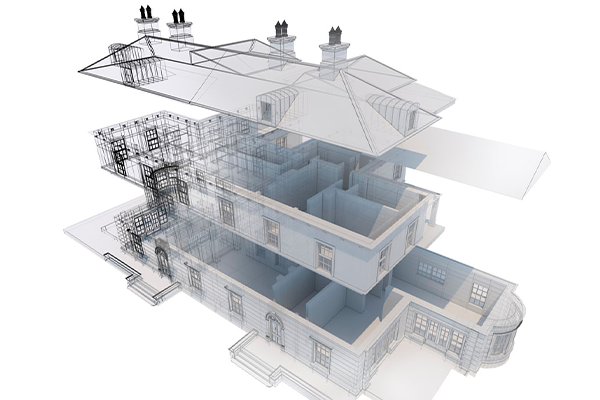
The construction and design industries have moved from traditional 2D blueprints to immersive, data-rich digital models as we journey through the era of digital transformation. This evolution is being powered by 3D architectural modelling, a process that brings accuracy, efficiency, and creativity together under one digital roof.
We believe at Genesis Infoserve that visualization is the bedrock of innovation. Architectural modelling in the modern age is not about creating photorealistic imagery, it’s also about seamless collaboration, improved project coordination, and data-driven decision-making, from concept to completion.
Be it the design of a residential space, commercial tower, or industrial facility, 3D architectural modelling helps visualize the end product in remarkable detail even before construction begins.
What is 3D Architectural Modelling?
3D architectural modelling is, simply put, the creation of the building’s design in three dimensions. Everything, from structural details and textures to materials, lighting, and spatial relationships, is depicted in a virtual environment.
Unlike 2D drawings, such models give real foresight into the project, enabling architects, engineers, and clients to better understand how the final structure would look and function.
Advanced architectural modelling software, such as Revit, SketchUp, and 3ds Max, has allowed professionals to create detailed models that are very accurate down to small details, making the detection of potential errors easier in the early design phase.
Evolution of Architectural Modelling
A decade ago, design teams primarily relied on CAD drawings. While functional, they lacked depth and spatial clarity. The rise of BIM and 3D visualization tools changed that forever.
Today, architectural modelling integrates several disciplines on one collaborative platform: architecture, structure, and MEP modelling. It helps architects and engineers coordinate seamlessly, ensuring alignment between design intent and technical feasibility right from the outset.
In 2025, this integration will have become more intelligent than ever. Cloud-based collaboration, virtual walkthroughs, and AI-driven design simulations have changed architectural models into a dynamic ecosystem that evolves alongside the project.
Exploring 3D Architectural Modelling Types
They do not all serve the same purpose when it comes to 3D architectural modelling types. Each one is tailored to a specific stage in either the design or construction process. Knowing such types aids the professional in picking the right approach for maximum efficiency.
1. Conceptual Models
Conceptual models are used at the early stage of a design and focus on massing, form, and spatial layout. They allow architects to experiment with shapes and volumes before diving into finer details.
2. Work or Design Development Models
The designs are then taken to detailed development after a conceptual approval. These models include structural components, materials, and dimensions that bridge the gap between conception and construction.
3. Presentation Models
These high-quality visualizations serve for presentations to the client and marketing. With realistic textures, lighting, and environmental context, they provide a near-photorealistic view of the proposed design.
4. Construction and As-Built Models
These models are utilized at the construction and post-construction stages and include the exact information required for execution, installation, and facility management. They ensure that what is constructed on site exactly aligns with the design intent.
Each of these types of 3D architectural modelling plays an important role in the lifecycle of the project, from conceptualization to post-construction operations.
The Benefits of Architectural Modelling
Architectural modelling has now become an important paradigm for the successful execution of a project. Let’s look at some key benefits it offers to architects, engineers, and clients alike.
1. Enhanced Visualization and Communication
What 3D models do for design discussions is bring clarity and visual accuracy. Clients can easily interpret the design intent without needing technical knowledge, minimizing misunderstandings and last-minute changes.
2. Early Error Detection
With 3D architectural modelling, potential design clashes and structural conflicts are identified early to reduce costly rework during construction. This is especially valuable when integrated with MEP Modelling to ensure that mechanical, electrical, and plumbing systems align with architectural and structural layouts.
3. Improved Design Accuracy
3D models ensure that every measurement, surface, and joint is precisely aligned to project specifications. Designers can test different material options, light settings, and facade treatments for the best aesthetic and functional outcome.
4. Time and Cost Efficiency
The automation tools in architectural modelling software help in streamlining repetitive tasks, accelerating approvals, and reducing dependency on multiple revisions. Results: quicker project turnarounds and superior cost controls.
5. Real-Time Collaboration
Cloud-enabled platforms allow several teams to collaborate on a shared model. This better supports the collaboration between architects, engineers, and contractors in view of the latest design updates.
6. Sustainability and Energy Optimization
Sustainable design is arguably the biggest advantage of modern modelling practices. It enables the testing, through simulation, of the performance of the building in question pertaining to lighting, ventilation, and energy consumption, leading to greener, smarter designs.
7. Seamless Integration with BIM and MEP Systems
Architectural modelling combined with MEP Modelling creates a comprehensive digital environment in which every system, structural, electrical, plumbing, and HVAC, functions in harmony. This helps promote efficiency while allowing the designers to know that their designs are both aesthetically pleasing and technically possible.
Practical Applications of 3D Architectural Modelling
The versatility of 3D modelling has increased its use in different construction and design areas, including:
- Residential Projects: Visualization of interiors, façades, and layout for homeowners before construction.
- Commercial Spaces: Presenting realistic designs to investors and stakeholders in offices, malls, and retail outlets.
- Infrastructure Development: This ranges from complex urban structures’ planning and coordination between teams.
- Restorations: Accurately digitally recreating and preserving heritage structures with cultural sensitivity.
- Industrial Facilities: Integration of mechanical and architectural design to facilitate planning, considering maximum safety.
Each application emphasizes one great benefit: 3D architectural modelling transforms imagination into a digital, interactive, and modifiable asset.
The Future of Architectural Modelling
With continuing development in technologies like Artificial Intelligence, Virtual Reality, and Digital Twins, architectural modelling will eventually evolve beyond the creation of visualizations to actual simulation.
Imagine walking through a digital version of your building before it’s even constructed, or getting automated insights into structural performance and energy efficiency. This is where the industry is heading.
At Genesis Infoserve, we’re ever open to new horizons in architectural modelling and are always blending creativity with advanced computational design. Our expertise ensures that every model isn’t just a visual output-it’s a data-driven base for smarter construction and sustainable development.
The power of 3D architectural modelling lies in connecting creativity with technology. It has reshaped how architects design, how engineers coordinate, and how clients envision their projects. The 3D architectural modelling types range from conceptual models to final as-built digital twins, creating a comprehensive ecosystem for collaboration and precision. Integrated with MEP Modelling and BIM workflows, it offers unparalleled control over every minute detail of the design to ensure projects look stunning while remaining equally flawless on the technical front. With an increasingly digital future, Genesis Infoserve continues to set the pace: helping clients tap into the full potential of architectural modelling to build smarter, faster, and better than ever.