
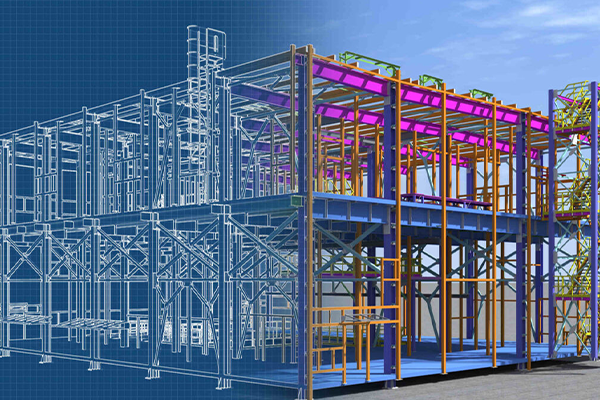
In 2025, the construction industry will be more interconnected, data-driven, and sustainability-focused than ever before. As projects grow in complexity and scale, collaboration among architects, engineers, and contractors has become the key to efficiency. Among the many technologies reshaping this landscape, MEP Modelling stands out as one of the most transformative.
At Genesis Infoserve, we view MEP Modelling not just as a design tool but as the foundation for smarter, more efficient, and future-ready infrastructure. By integrating mechanical, electrical, and plumbing systems into a unified digital environment, we help our clients achieve seamless coordination, cost optimization, and sustainable outcomes, essential elements in today’s competitive construction market.
Understanding MEP Modelling
MEP Modelling is an advanced Building Information Modeling (BIM) process that integrates the mechanical, electrical, and plumbing elements of a building into a single intelligent 3D model. It goes far beyond traditional 2D drafting by enabling engineers to design, simulate, and analyze real-world system performance before a single component is installed on-site.
In the intelligent model, everything from ducts and pipes to cable trays and fixtures is data-rich, carrying with it such essential information as size, material, pressure, load, and performance parameters. This enables project teams to make more informed decisions, facilitates greater collaboration, and reduces design conflicts early in project lifecycles.
In the era driven by digital transformation for competitive advantage, MEP Modelling is no longer an add-on; it’s a necessity.
Why MEP Modelling Matters in 2025
The future of the construction ecosystem is cloud collaboration, AI-driven design, and sustainability. Here’s how MEP Modelling aligns with the market’s most recent requirements:
1. Smarter Coordination Through BIM Integration
Modern projects involve several stakeholders such as architects, structural engineers, contractors, and facility managers. MEP Modelling can thus enable them all to come together under one digital space to ensure that all the systems are well aligned. The advantage of this real-time coordination is also reduced errors and reworks, therefore speedier and more assured project delivery.
2. AI-Powered Clash Detection and Predictive Design
Tools integrated with Revit and Navisworks in 2025 use artificial intelligence to predict clashes and inefficiencies even before traditional detection runs. This, therefore, makes MEP modelling a cornerstone for design accuracy and risk mitigation.
3. Sustainability and Energy Optimization
With stricter global sustainability standards like LEED, IGBC, and BREEAM becoming mainstream, MEP Modelling allows engineers to simulate HVAC efficiency, lighting layouts, and plumbing systems for reduced energy consumption. Genesis Infoserve integrates energy simulation within our MEP workflows to help clients design greener, more sustainable spaces.
4. Faster Design-to-Execution Pipelines
Modern construction demands speed without sacrificing quality. Through MEP Modelling, prefabrication and modular construction are now easier to implement. By creating fabrication-ready 3D models, we help reduce on-site installation time and material wastage, a trend dominating the 2025 construction scene.
5. Lifecycle Management with Digital Twins
As the momentum of digital twin technology continues to build, MEP Modelling is the basis for virtual models of the building that support systems performance monitoring, predictive maintenance, and facilities management long after a project is complete.
At Genesis Infoserve, MEP Modelling for digital twin workflows is already underway to let our clients get ahead of the curve in facility management and building operations.
Key Features of Modern MEP Modelling
Evolution within BIM technologies has significantly upgraded the process of MEP modelling into a strong, analytical platform. The following are some of the highly influential features of the same for the construction workflow in 2025:
1. Cloud-Based Collaboration
For instance, Autodesk BIM 360 and ACC are modern platforms that enable MEP engineers to collaborate in real time over different geographies. This Hubbion solution eliminates delays in manual coordination and ensures that each design update automatically appears across all teams in real time.
2. Clash detection and design validation-automated
Indeed, today’s automated rule-based engines can intelligently identify and resolve design conflicts, suggesting optimal routing solutions autonomously. These features alone have brought down project turnaround times drastically, improving the design quality manifold for MEP Modelling projects handled by Genesis Infoserve.
3. Data-Driven Decision Making
With every component storing data points, analytics tools can analyze performance metrics to help engineers make smarter decisions about materials, energy usage, and the most efficient maintenance strategies.
4. Improved Visualization and AR/VR Integration
The usage of Augmented and Virtual Reality tools for MEP Modelling can enable clients and contractors to walk through 3D spaces before construction ever starts. This immersive visualization communicates better, reduces misunderstandings in design, and increases client confidence.
5. Sustainability Simulations
Sustainability is no longer optional; it is the industry standard. MEP Modelling helps simulate airflow, lighting efficiency, and water systems so that teams can design buildings that are energy-efficient and align with global goals on the environment.
How Genesis Infoserve Applies MEP Modelling
At Genesis Infoserve, our deep engineering expertise combines with the latest technology platforms to execute well-coordinated, construction-ready MEP design. Our team leverages intelligent models of MEP using Autodesk Revit, Navisworks, and BIM 360 for collaboration-driven and accurate designs across disciplines.
Here’s how we bring innovation into every project:
Design Coordination:
Our team develops integrated MEP systems that coordinate harmoniously with architectural and structural models to ensure clash-free and fully constructible designs.
Prefabrication and Modular Support:
Our MEP Modelling workflows are optimized for prefabrication, enabling contractors to assemble MEP components off-site and accelerate the project delivery cycle.
Sustainability Analysis:
We analyze HVAC efficiencies through BIM-based energy modelling, lighting layouts, and water conservation strategies to achieve sustainability goals.
Construction Documentation:
We produce fabrication drawings, installation details, and shop drawings directly from the MEP model for real-time accuracy.
Digital Twin Integration:
Our models become digital twins for the asset and establish long-term asset management and predictive maintenance.
Genesis Infoserve’s approach ensures that the MEP design is not only technically correct but also economically viable and environmentally responsible-building qualities that define success in 2025.
The Future of MEP Modelling
Looking ahead, automation, AI integration, and the use of the Internet of Things point to a different future of MEP modelling. Buildings are becoming smarter, and so are the tools used in designing them.
AI-Driven Optimization:
Machine learning algorithms will be implemented for refining the routing of the systems, contributing to lower pressure losses and better overall performance in the building.
IoT-enabled monitoring:
MEP models would directly interface with sensors and control systems for real-time performance data required for the maintenance of buildings.
Sustainable Digital Twins:
Sustainability will extend beyond design into the continuous observation of energy use and the automation of system settings for maximum efficiency.
At Genesis Infoserve, we have already embraced such future-forward approaches. By upgrading our processes and continuing to invest in next-gen BIM technologies, we’re helping clients transition from traditional workflows to data-centric, intelligent construction practices.
In 2025, the construction industry will rely on accuracy, teamwork, and environmental friendliness, and the hub of all these features is MEP Modelling. This starts with early design coordination and moves all the way through to post-construction asset management, guaranteeing that each system in a building works in harmony. At Genesis Infoserve, we don’t just adopt new technologies but lead with them. Our MEP Modelling expertise enables clients to construct smart, construct faster, and construct green while setting new benchmarks for design excellence and project efficiencies. With buildings becoming smarter, Genesis Infoserve has remained a partner of repute for intelligent MEP solutions that power the future in construction.