
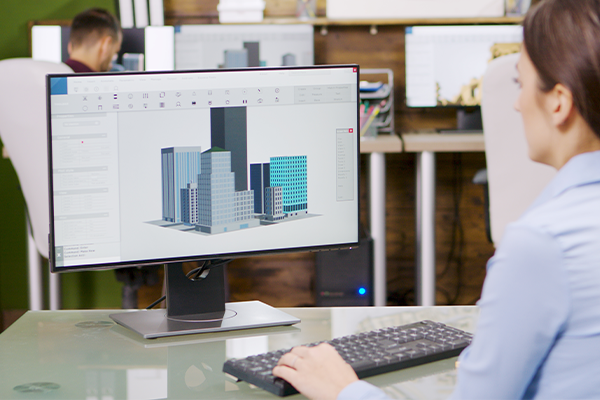
In the world of AEC, which is continuously in change, digital precision turns out to be the most important factor for delivering complex projects efficiently. Among the most transformative tools driving this shift is Revit Modelling technology, which has totally changed how AEC professionals design, plan, and execute projects.
From architects and MEP engineers to contractors, Revit has become a powerful facilitator of collaboration, conflict resolution, and data integrity throughout the design process from inception to completion within the Revit Modelling USA spectrum. Be it a commercial tower, a healthcare facility, or an infrastructure development project, Revit Modelling ensures that projects are delivered with the highest degree of accuracy, coordination, and sustainability.
This practical guide explores how Revit is shaping the AEC workflow in the US, its key benefits, and why professional Revit Modelling Services are now indispensable in modern construction.
What Makes Revit Modelling Essential in AEC
Unlike typical CAD software, Revit Modelling offers a parametric, data-rich environment in which every component of a project is digitally represented with its physical and functional properties. Each model serves as a live database, in which any change to one element immediately updates the system as a whole, providing consistency and minimizing human rework.
In the fiercely competitive AEC market of 2026, projects need to be both smarter and more sustainable. In such a scenario, the multi-disciplinary integration of Revit allows the architect, structural engineer, and MEP professional to collaborate on the same unified model. This not only accelerates project delivery but also improves accuracy and cost efficiency.
The Rise of Revit Modelling in the USA
In the last couple of years, Revit Modelling in the USA has been adopted at a very rapid pace throughout the public and private sectors. Why? The construction sector in the United States is now focusing on digital transformation to be able to handle projects with stringent deadlines, within execution, and sustainable development challenges.
From federal infrastructure programs to building projects at the state level, Revit’s role in digital coordination has become indispensable. It allows the stakeholders to visualize the design in 3D, thereby identifying clashes early and integrating various systems seamlessly; hence, it has become a cornerstone in BIM-based workflows.
Many US AEC firms are integrating Revit Modelling Services, coupled with cloud collaboration in Autodesk BIM 360 and ACC, to enable real-time updates and facilitate coordination even when teams are distributed across multiple offices or project sites.
Key Benefits of Revit Modelling for AEC Professionals
1. Comprehensive 3D Visualization and Documentation
Revit Modelling lets architects and engineers create 3D models that go beyond aesthetics. Each model contains detailed metadata-from material types to mechanical loads-which enables project teams to visualize, analyze, and document every design component with accuracy. This reduces errors in construction and makes sure the physical build comes out perfectly as per digital plans.
2. Seamless Collaboration and Coordination
In today’s globalized design environment, AEC teams are often geographically dispersed. The collaborative features in Revit provide the capabilities for multiple users to work on a model at the same time. This seamless real-time exchange of data bolsters communication, reduces design conflicts, and allows for quicker approvals.
Partnerships with professional Revit Modelling Services guarantee that all disciplines in the firm, architecture, structure, and MEP work in full harmony; data integrity is not compromised in a project’s whole life cycle.
3. Clash Detection and Risk Mitigation
One of the most valuable aspects of Revit Modelling is clash detection. It automatically identifies conflicts between the various systems; whether it’s HVAC ducts running into beams or plumbing colliding with electrical conduits, far in advance of construction. Proactive detection avoids expensive on-site mistakes and rework.
4. Accurate Cost and Schedule Estimation
Integration with cost and time data within Revit allows project managers to directly extract 4D (time) and 5D (cost) information from the model. By linking design elements to material quantities, teams can generate precise estimates, track progress, and optimize resource allocation. These reasons make Revit Modeling Services an important element for those firms seeking enhanced financial control of projects.
5. Energy Analysis and Sustainable Design
Sustainability is of utmost importance in every construction firm in the US. The energy analysis tools in Revit Modelling in the USA do help designers in assessing a building’s environmental performance at an early design phase. By simulating daylight, thermal comfort, and HVAC loads, among other factors, teams can optimize their designs to meet the standards for LEED and other green certifications.
Revit Modeling Services: The Professional Edge
While Revit is an extremely powerful tool, it really lives up to its full potential only when implemented strategically. This is exactly where expert Revit Modelling Services step in. Professional service providers, like Genesis Infoserve, bring deep industry expertise and technical precision with the latest workflows in Revit to enhance design accuracy and coordination.
Outsourcing Revit Modeling Services to experienced teams helps AEC firms focus on core design activities while ensuring that their BIM deliverables meet global standards. Be it creating detailed architectural models, MEP coordination, or structural detailing, these services maintain consistency throughout all phases of a project.
Key areas where professional services add value include:
- Detailed Revit family creation, including architectural and MEP components.
- Clash-free multi-disciplinary coordination models.
- Construction documentation, LOD 100–500, and shop drawings.
- Model auditing and quality control in accordance with US codes and standards.
- Integration with BIM workflows for data management and facility operations.
Revit Modelling in the USA: Current Trends and Future Outlook
The US AEC industry is at the threshold of a digital revolution, and at its helm is Revit Modelling in the USA. As AI, cloud computing, and digital twin technology continue to advance, Revit is increasingly becoming the central hub for project intelligence.
Some of the emerging trends shaping the future include:
- Cloud Collaboration: Integration with Autodesk Construction Cloud and other SaaS platforms ensures real-time updates and remote collaboration.
- AI and Automation: Machine learning tools are improving model optimization, design validation, and cost prediction.
- Digital Twins Integration: This connects the model of Revit with real-time operational information for effective facility management upon completion.
- Better Visualization: The application of VR and AR technologies now helps clients and contractors to see projects in immersive environments.
With these technologies maturing, AEC professionals in the US are increasingly depending on Revit Modelling as the backbone for their digital workflows, driving efficiency, sustainability, and profitability.
Genesis Infoserve: Your Partner in Revit Excellence
At Genesis Infoserve, we understand that precision and coordination define project success in today’s construction ecosystem. Our advanced Revit Modelling Services empower AEC professionals across the globe, including clients in the USA, to transform their workflow with accuracy, speed, and innovation.
Be it architectural detailing, MEP coordination, or as-built documentation, our team makes sure that each model perfectly aligns with the project’s requirements and industry standards.
From design collaboration, construction management, and facility handover, Genesis Infoserve helps clients unlock the full potential of Revit Modelling by combining technical expertise with strategic consulting.
For AEC professionals in the USA, using Revit Modelling is no longer optional; it is a competitive necessity. As projects grow in size and complexity, digital collaboration and precision modeling will increasingly define the industry’s success. Expert Revit Modelling Services can help companies streamline the workflow by reducing errors and delivering smarter, data-driven buildings that fulfill all contemporary standards of quality and sustainability. Not only does Genesis Infoserve keep up with the times, but with a trusted partner by your side, it means staying ahead of the curve.