
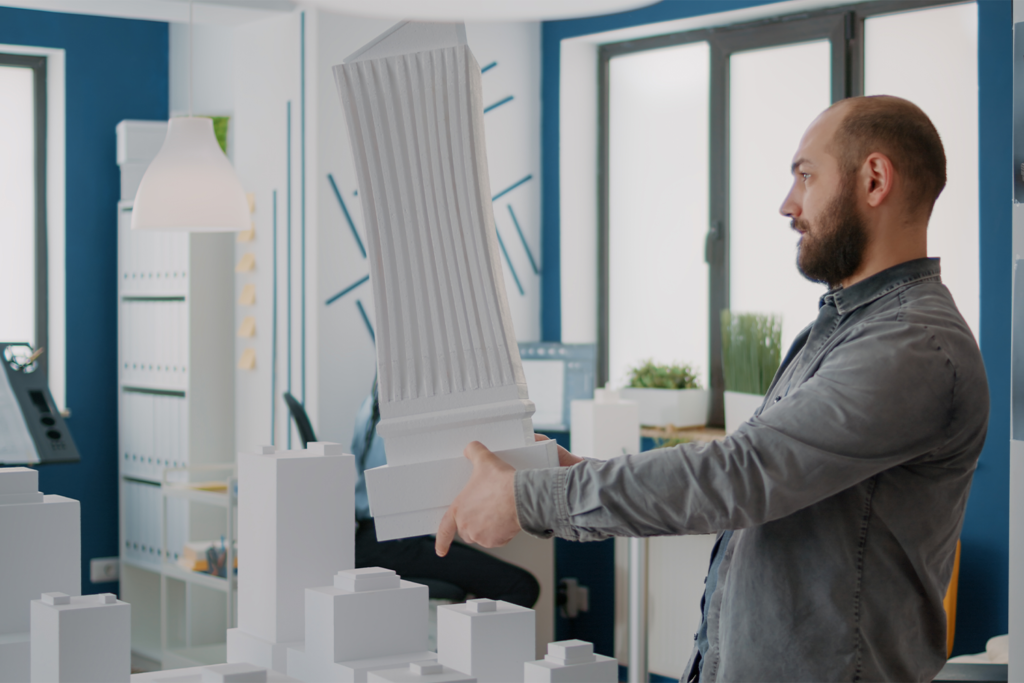
The Importance Of Architectural Modeling Within Indian Construction
Many Indian construction projects have some of the most complex site conditions, are executed at the fastest pace, and require multiple disciplines to be coordinated together to achieve a successful outcome. Traditional planning techniques alone are no longer capable of effectively addressing all these challenges.
Through the implementation of Architectural Modeling, the construction industry now has a definitive competitive advantage.
Using architectural modeling allows project teams to:
- Create in-depth visual representations of proposed design solutions
- Analyse structural relationships and spatial arrangements
- Mitigate uncertainty related to construction processes
- Mitigate uncertainty related to construction processes
- Provide improved planning and execution capabilities
With the adoption of Building Information Modeling, architectural workflows have become increasingly data-driven and collaborative, allowing project participants to work in a way that maximizes clarity and efficiency.
The Importance Of Material Representation For Architectural Modeling
A large portion of the job associated with modeling is about material representation. Materials are used not only to provide a visual representation of what the building will look like upon completion but also to show how the building will function and perform under real-life conditions.
For architectural modeling in India, the selection of materials often depends upon:
- The climate in which the structure will be built
- Budget, including estimated labor costs
- Environmentally sustainable factors
- Structural performance criteria
- Maintenance expectations
Architectural modeling work processes have developed so that designers are able to evaluate materials digitally, thus saving them from making costly revisions to project work after construction begins.
The Various Types Of Building Models Used For Indian Projects
The type of models used depends on the types of projects for which they are developed and how they will be used in the modeling process. The most commonly used materials in building models include:
Foam And Cardboard
Generally, they have a great deal of use in the construction of conceptual and mass scale models due to being easy to work with, inexpensive, and can be shaped easily.Plastic Sheets
Are used for the production of transparent surfaces in building projects such as glass facades and curtain wall systems.M.D.F. Lumber
Used for the construction of presentation-style models that require long-term durability and realistic texture.3D Printed Parts
Are being used more often in the construction of Complex geometric shapes and precision-based structures in modern building projects. Although physical model materials are still essential for presentation purposes and design review, larger-scale and more technically precise construction projects are increasingly using digital workflow via BIM.
Improving Architectural Models With Expert Techniques
1. Flexible Design With Parametric Modelling
Indian urban developments often need to make modifications to their designs as a result of client specifications, zoning laws, or constraints created by the site.
- Flexibility for designers in creating designs
- Accurate changes made to a design
- Reduction in time taken to produce updated designs
- Continuing to coordinate designs consistently
Parametric Modelling has some very specific applications, including (but not limited to) high-rise, mixed-use, and infrastructural projects.
2. Designing BIM For Integrated Coordination
- Identify Design Conflicts Early in the Process
- Increase Project Coordination
- Reduce Installation Conflicts
- Improve the Accuracy of Documentation
3. Material Simulation For Realistic Visuals
Visual accuracy impacts a lot on a client’s approval of a project as well as on communicating designs. Modern Architectural Modelling uses material simulation to create realistic representations of surfaces, textures, and finishes.
This allows all parties involved in a project to evaluate:
- The look of the exterior facade
- How will finishes be combined within the interior
- How light will interact with materials
- The overall aesthetics of the project
These visual representations provide greater clarity for decision-making during the design process.
4. Modeling Building Structure And Site
The buildings in India are located in a wide variety of climates, from very humid coastal buildings to very extreme hot climate buildings.
With advanced modeling techniques, we can analyze:
- The amount of sunlight available
- The efficiency of mechanics based on positive air movement
- Thermal performance of buildings
- Opportunities for energy efficiency
Using these modeling techniques together with Building Information Modeling (BIM) can result in better design solutions.
5. Detailing Techniques That Are Based On Precision
Accurately dressing work will dramatically reduce the errors made within the construction process by using precision-based detailing to create accurate digital representations of building components before execution. This provides benefits including:
- Fabrication correctness
- Structural coordination
- Construction sequencing
- Efficiency of execution on site
As Indian architectural projects advance technologically, attention to precise Architectural Modelling is being given more emphasis.
BIM Services’ Increasing Use In Indian Architecture
Architectural firms and developers use BIM services increasingly to deliver better quality modelling and improve collaboration on complex projects/projects with multiple professionals. It provides support for:
- Multi-Discipline Coordination
- Accurate Digital Documentation
- Clash Detection Workflow
- Project Planning and Visualization
BIM services help your firm increase project execution while delivering quality and consistency across multiple workflows
Why BIM Modelling Is Necessary For Newer Buildings In India
Due to unprecedented growth rates in cities around India, our cities require improved schedules, faster completion times, and reduced risk. The traditional method of drafting may leave many gaps between contractors and produce substandard construction quality
Using advanced BIM technology, project teams can:
- Improve communication between disciplines
- Simulate construction activities digitally
- Optimize project scheduling
- Reduce costly rework during execution
All commercial, residential, and infrastructure projects need this type of enhanced coordination now for successful completion.
MEP Modelling is extremely important within today’s renovation workflow in India. By helping to increase the precision of designing, being able to create MEP practically, and using accurate and reliable Building Information Model (BIM) services for digital project completion, renovation teams can reduce the risk with confidence and greatly enhance their ability to achieve a high-quality finish.
As the Indian construction sector progresses to a more contemporary style of operations, the use of Building Information Models to support intelligent renovation strategies will assist in converting old buildings into modern and energy-efficient buildings that are ready for the future!
Enhancing Teamwork By Utilizing Building Information Modeling For Construction
Everyone involved in building a construction project works together throughout the entire duration of the project (architects, consultants, contractors/developers).
With BIM, every person on the team shares information within a single digital environment, hence improving teamwork, communication, and visibility.
Improved collaboration result in:
- Faster decision-making
- Improved project visibility
- Improved management of changes
- Reduced delays due to coordination efforts
The benefits of increased collaboration are that each project is more predictable and manageable.
Making SMART Buildings Sustainable
The use of sustainable practices in construction has grown tremendously in India over the last few years. The desire for energy-efficient and environmentally friendly designs is driving owners & developers to increasingly look for ways to create these types of buildings.
Modern Architectural Modelling provides support for the planning and design of sustainably built environments through:
- Material optimization
- Energy analysis
- Daylight modeling
- Waste reduction strategies
The combination of these workflow processes, along with other services, provides the ability to produce SMART buildings both economically and, if needed, with the ability to evolve with the times.
BIM Services To Support Improving Project Execution
In India, there is a surge in digital construction being used, and so there is a requirement for the development of technical skills and streamlined processes to enable multiple businesses to effectively perform their work
The use of professional BIM helps project teams to be more accurate with:
- Coordination
- Documentation
- Construction Plans
- Efficiency of Project Execution
Having access to BIM will help companies in the architecture and construction fields manage their project schedules and quality more effectively.
A More Intelligent Approach To Achieving Building Quality In Architecture
Summary
Prospects for India’s construction sector rest upon accuracy, teamwork, and advanced planning capability. The purpose of Genesis Infoserve the Modern Architecture Model (MAM) is not only to provide an artistic rendering but also to be an integral part of every phase of project delivery.
Project teams are able to create higher quality design outputs through the use of sophisticated material visualization methods, reliable BIM (or BIM models), and precise BIM Models. In addition to minimizing job site risk by improving coordination and communication across all discipline participants involved in executing the building process.
As digital technology continues to transform the world of construction, Building Information Modeling will have a significant impact on transforming architectural processes into more intelligent, efficient, sustainable, and construction-ready facilities in India.
FAQs
1. What is Architectural Modelling in construction projects?
2. Why is BIM modelling important for Indian buildings?
3. How do BIM services support architectural projects?
Professional BIM services help with project visualization, clash detection, digital documentation, multi-disciplinary coordination, and efficient construction planning.