
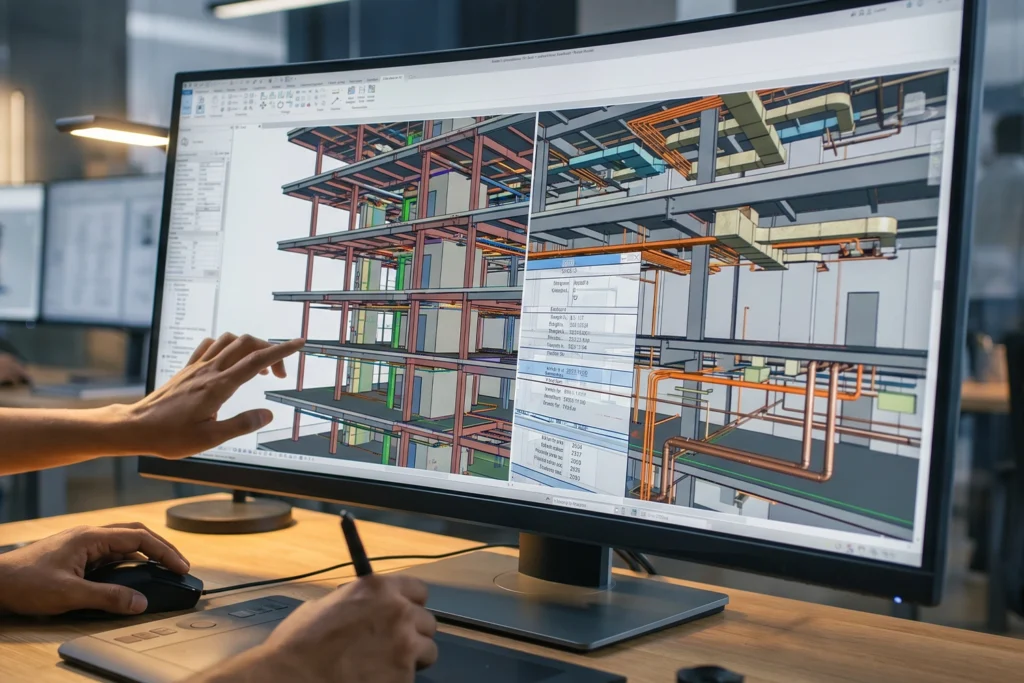
A single design revision can trigger changes across floor plans, sections, schedules, and service layouts. Without the right technology, keeping every document aligned can become time-consuming and error-prone. This is where REVIT modelling transforms the way modern projects are delivered, helping teams adapt quickly while maintaining consistency across project information.
The Architecture, Engineering, and Construction industry continues to accelerate its digital transformation. Autodesk reports that Revit has introduced more than 500 enhancements over the past several years to support evolving project demands, while industry research shows that BIM adoption has moved from being a competitive advantage to an industry expectation.
This blog explores how Revit is reshaping project delivery and why firms increasingly rely on it to improve accuracy, efficiency, and coordination. Genesis Infoserve will help you understand the advantages that make Revit indispensable in today’s built environment.
What Is Revit Modelling?
At its core, REVIT modelling is the creation of intelligent digital representations of buildings using Autodesk Revit. Unlike conventional drafting tools that generate isolated drawings, Revit builds interconnected models where every element carries both geometric and informational value.
When one component changes, related views and documentation update automatically. This connected workflow allows teams to spend less time on repetitive revisions and more time refining project quality.
A Revit model can contain information related to:
- Building layouts and spatial planning
- Structural components
- Mechanical and electrical systems
- Plumbing networks
- Material specifications
- Documentation outputs
- Scheduling information
This integrated approach has made BIM modelling an essential process for multidisciplinary project teams seeking greater control over project information.
As digital practices continue to evolve, Revit plays a central role in supporting efficient BIM construction workflows from design development through project execution.
Advantages Of Revit Modelling In BIM Projects
Technology should solve problems, not create them. The growing adoption of Revit is driven by its ability to simplify processes that traditionally consumed significant time and resources.
Below are some of the advantages that continue to influence how projects are planned and delivered.
Faster Design Changes Without Rework
Design evolution is a natural part of every project.
One of the biggest strengths of this type of modelling is its parametric functionality. Instead of manually updating dozens of drawings after each revision, modifications automatically flow throughout the model.
This enables teams to:
- Respond quickly to client feedback.
- Minimize documentation errors.
- Reduce repetitive tasks.
- Maintain consistency across deliverables.
The result is greater agility without compromising quality.
Better Visualization Before Construction Begins
Many project stakeholders struggle to interpret traditional two-dimensional documentation.
Revit bridges this gap by creating detailed visual representations that improve understanding before work begins on site.
Benefits include:
- Clearer communication with clients.
- Improved design reviews.
- Enhanced stakeholder confidence.
- Better-informed approvals.
This capability has significantly improved modelling that is architectural, allowing design intent to be communicated with greater clarity.
Improved Coordination Between Building Systems
Modern buildings depend on multiple disciplines working together efficiently.
Through integrated workflows, Revit helps teams visualize how architectural, structural, and service components interact within the same environment.
For teams handling MEP modelling, this means:
- Identifying potential clashes early.
- Improving routing efficiency.
- Supporting constructability reviews.
- Reducing coordination conflicts.
Resolving issues digitally often saves substantial time and resources during execution.
More Reliable Documentation
Documentation accuracy directly influences project outcomes.
Because Revit maintains relationships between project views, schedules, and annotations, teams can generate coordinated deliverables with greater confidence.
Advantages include:
- Improved drawing consistency.
- Reduced omissions.
- Faster documentation updates.
- Better quality control.
These efficiencies strengthen overall modelling for BIM practices by ensuring project information remains dependable.
Greater Efficiency Across BIM Construction
Construction teams increasingly expect information that is coordinated, current, and accessible.
Revit supports this expectation by streamlining workflows that traditionally involved multiple disconnected processes.
Organizations engaged in construction of BIM benefit through:
- Faster information exchange.
- Reduced redesign efforts.
- Improved workflow predictability.
- Better project visibility.
As schedules become tighter and projects more demanding, efficiency gains become increasingly valuable.
Enhanced Accuracy In Building Design
Attention to detail remains critical throughout project development.
Modern Architectural modelling demands precision that extends beyond visual representation. Revit enables teams to refine design decisions using data-rich models that improve both quality and constructability.
This leads to:
- Better-informed decisions.
- Improved project outcomes.
- Reduced coordination gaps.
- Stronger confidence in deliverables.
Smarter Services Integration
Building services form the backbone of functional spaces.
Advanced MEP modelling workflows help teams coordinate mechanical, electrical, and plumbing systems within constrained environments.
By integrating services into a unified model, project teams can:
- Optimize available space.
- Improve installation planning.
- Reduce site disruptions.
- Support smoother execution.
This proactive approach contributes significantly to successful project delivery.
Better Decision-Making Through Data
Beyond geometry, Revit provides access to meaningful project intelligence.
Teams can leverage embedded information related to quantities, materials, and schedules to support informed planning.
This capability elevates BIM modelling from a visualization exercise into a decision-support process that helps organizations anticipate challenges and identify opportunities before they impact delivery.
How Revit Creates Long-Term Value Beyond Design
The impact of Revit doesn’t end when drawings are issued or approvals are secured. One of its biggest advantages is the continuity of information it provides throughout a project’s lifecycle.
Because models contain embedded project intelligence, teams can reference the same dataset during design refinement, construction planning, and future modifications. This reduces information loss and improves confidence in decision-making.
The benefits extend to:
- Better quantity tracking and scheduling.
- Faster response to project changes.
- Improved coordination between stakeholders.
- More accurate project documentation.
- Enhanced visibility into project requirements.
According to Autodesk, intelligent workflows allow project teams to connect data and processes more effectively, leading to improved outcomes and greater efficiency.
Why Businesses Continue Investing In Revit
The AEC industry is under constant pressure to deliver projects faster without compromising quality. Revit addresses this challenge by helping professionals work smarter rather than simply working harder.
Organizations increasingly adopt this type of modelling because it supports:
- Greater design confidence.
- Reduced rework and revisions.
- Improved productivity.
- Better communication among teams.
- More predictable project delivery.
These advantages make Revit particularly valuable for firms handling multidisciplinary projects where coordination and precision directly influence project success.
As digital practices continue to mature, intelligent workflows are becoming an expectation rather than a differentiator.
How Genesis Infoserve Supports Digital Project Delivery
Implementing advanced technologies requires both technical expertise and a clear understanding of project objectives.
They help organizations strengthen their digital workflows by delivering solutions tailored to the unique demands of the Architecture, Engineering, and Construction sector. From project visualization to coordinated BIM modelling, the focus remains on accuracy, efficiency, and practical value.
Whether teams require support for Architectural modelling or discipline-specific coordination, the goal is to create dependable digital deliverables that contribute to smoother execution and better outcomes.
With an emphasis on quality and evolving industry practices, their team enables businesses to maximize the value of modern project technologies while adapting confidently to future demands.
Summary:
As projects become more sophisticated, the need for connected and intelligent workflows continues to grow. The advantages of REVIT modelling go far beyond creating three-dimensional representations. From improving visualization and documentation accuracy to strengthening coordination and supporting informed decision-making, Revit has become an essential part of modern project delivery.
Its ability to integrate multiple disciplines, simplify revisions, and provide reliable project information makes it a valuable investment for organizations seeking efficiency and consistency. As the future of the built environment becomes increasingly digital, firms that embrace innovative tools today will be better positioned to deliver successful projects tomorrow.
FAQs:
1. What is REVIT modelling used for?
REVIT modelling is used to create intelligent building models that support design, documentation, coordination, and construction planning throughout a project’s lifecycle.
2. How does Revit support BIM construction?
It helps teams work with connected project information, improving coordination, reducing errors, and enhancing efficiency across BIM construction activities.
3. Is Revit suitable for Architectural modelling?
Yes. Revit is widely used for Architectural modelling because it enables accurate design development, visualization, and automated documentation updates.
4. What are the benefits of using Revit for MEP systems?
Revit improves MEP modelling by supporting clash detection, better routing, and enhanced coordination between building services and other disciplines.
5. How does BIM modelling improve project outcomes?
BIM modelling enables teams to make informed decisions using accurate project data, resulting in better collaboration, improved efficiency, and reduced rework.